Food Safety Governance in South Africa: From Fragmentation to Fit-for-Purpose
Food Safety Governance in South Africa: From Fragmentation to Fit-for-Purpose
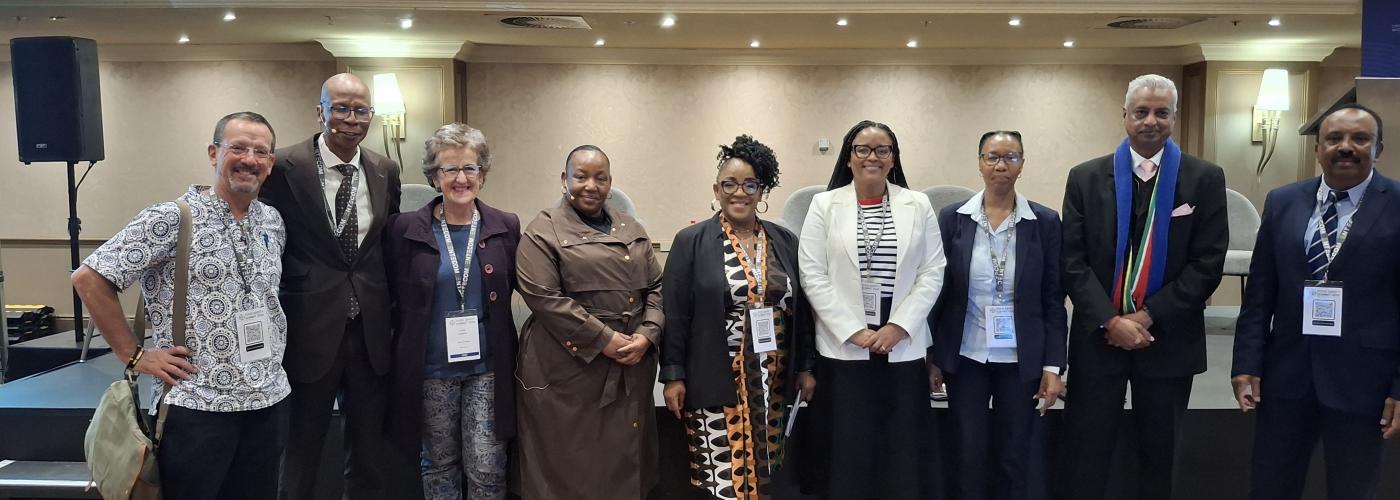
8 June 2026 - The Food Safety Leadership Initiative (FSLI) at Wits Business School (WBS) recently convened a multi-stakeholder dialogue to address one of the most pressing challenges facing South Africa’s food system: the absence of a coherent national food safety governance framework.
Representatives from government, industry, academia and civil society shared the platform at the Food Safety Summit 2026 to unpack the consequences of fragmented mandates, policy incoherence and unclear accountability across the food safety landscape. The discussion was underpinned by a growing recognition that weaknesses in governance can have profound consequences for public health, consumer trust and economic stability, and may contribute to preventable food-borne illness and loss of life.
The FSLI was founded in 2025 by Ravi Pillay, lecturer at WBS, and Professor Lucia Anelich, food safety specialist and visiting professor at WBS. According to Pillay, the catalyst for the initiative was the Naledi tragedy in Soweto in 2024, in which six children died because of food poisoning.
Against this backdrop, the dialogue challenged participants to move beyond individual incidents and ask a more fundamental question: what kind of food safety governance system does South Africa need to ensure that safe food is consistently delivered to all citizens?
From the outset, Pillay emphasised that the strength of the dialogue lay in the diversity of voices around the table. Rather than being a conventional conference panel or media debate, the session was designed as the beginning of an ongoing national conversation. The objective was not to identify villains or assign blame, but to surface practical solutions and foster collaboration among the institutions responsible for safeguarding South Africa’s food system.
A recurring theme throughout the discussion was that food safety cannot be separated from food security. In his keynote address, Director-General Mooketsa Ramasodi of the Department of Agriculture reminded delegates that access to safe and nutritious food is a constitutional imperative.
Ramasodi acknowledged that responsibility for food safety is spread across multiple government departments and implementing agencies, including Agriculture, Health and Trade, Industry and Competition.
Importantly, he noted that concerns about food safety governance are not new. Reference was made to policy work undertaken as far back as 1998, raising difficult questions about why longstanding governance challenges remain unresolved. Looking ahead, he suggested that South Africa faces a choice between two broad pathways: either significantly strengthen coordination across existing institutions or move towards a more centralised governance model with a single authority responsible for overall oversight.
While participants held different views on the ideal structure, there was broad consensus that the current system requires greater coherence.
Belinda Makhafola from the National Department of Health challenged the notion that South Africa’s primary problem is a lack of legislation. The country already possesses a substantial body of food safety laws and regulations, she argued. The challenge lies in implementation.
Makhafola identified three key constraints that continue to undermine the effectiveness of the system: coordination, capacity and resources. Fragmentation across institutions often makes collaboration difficult, while shortages of environmental health practitioners and inspectors limit the ability to conduct regular monitoring and enforcement activities.
She also stressed the need for stronger accountability mechanisms and more effective information sharing between stakeholders. In her view, South Africa should adopt a more risk-based approach to food safety governance, with government and industry agreeing on priority risk areas and directing resources accordingly.
The issue of information sharing emerged repeatedly throughout the discussion and became one of the strongest themes of the afternoon.
Meisie Katz, General Manager of Food and Associated Industries (FAI), highlighted the importance of food safety not only as a public health issue but also as a driver of economic development. A robust food safety system, she argued, can strengthen investor confidence, support agricultural growth and contribute to job creation.
While acknowledging that coordination between institutions has improved over time, Katz noted that important gaps remain. Her strongest concern centred on the availability and accessibility of information. Food safety-related data often resides in separate organisations and systems, limiting the ability of stakeholders to identify risks and respond quickly.
She advocated for the development of a shared data platform capable of connecting government departments, regulators and industry stakeholders. Better access to information, she suggested, would significantly improve coordination and risk management. Drawing on previous food safety incidents, she observed that while cooperation can be effective during crises, South Africa still lacks a sufficiently integrated mechanism for alerting stakeholders to emerging threats.
Civil society representative Mark Heywood challenged delegates to think beyond traditional definitions of food safety. While acknowledging the importance of food-borne disease prevention and regulatory compliance, Heywood argued that South Africa’s food challenges are also linked to nutrition, inequality and the broader food environment. He drew attention to the growing consumption of highly processed foods and the long-term health consequences associated with diets high in sugar and refined carbohydrates.
For Heywood, founder of Union Against Unger, food safety governance cannot be separated from the larger question of what kind of food system South Africa is creating and whether that system is promoting healthy outcomes for its citizens.
His contribution also introduced another powerful theme: political will. The challenge, he suggested, is not simply one of resources or technical expertise but of leadership and prioritisation.
Industry perspectives reinforced the importance of collaboration and shared responsibility. Zinhle Tyikwe of GS1 South Africa and the Consumer Goods Council highlighted the role of traceability, transparency and consumer information in strengthening food system trust. She pointed to emerging technologies and innovations that could help improve product information, supply-chain visibility and communication with consumers.
The National Consumer Commission’s Prudence Moilwa similarly highlighted the importance of traceability and prioritisation. She argued that both government and industry need to adopt a shared understanding of risk and work together to identify where interventions can have the greatest impact. Effective governance, she suggested, requires not only compliance but also a collective commitment to protecting consumers.
The session concluded with closing remarks from interim Head of School at WBS Professor Logan Rangasamy who emphasised that no single actor, whether government, business or civil society, can solve the challenge of food safety alone.
He said that WBS has committed to playing a role as a convenor, a partner, and a contributor to what many hope will become an ongoing national conversation about the future of food safety governance in South Africa. As a next step, WBS will convene a multi-stakeholder working group under the auspices of the FSLI to identify priority areas for collaboration and develop practical recommendations for action.
Media enquiries: alison.gaylard@wits.ac.za
Related News